Ceiling speakers guide: how to get balanced sound

Ceiling speakers offer an easy, elegant way to bring sound into a space. Music fills the room evenly, conversations stay uninterrupted, and the space itself remains clean and uncluttered. There’s no visible hardware to work around, so sound feels naturally part of the room. However, poorly designed ceiling speakers can create uneven coverage — often called “hot spots” — where audio feels full in one area and noticeably thinner in another. This is typically the result of narrow dispersion and improper planning. In this guide, we’ll cover how ceiling speakers work, how placement influences sound, and why Bose in-ceiling speakers are designed to deliver consistent, room-filling sound with a discreet, built-in presence.

Virtually Invisible 791 In-Ceiling Speakers standing in a white background

What are ceiling speakers, and when do they make the most sense?

Ceiling speakers are installed flush into the ceiling and designed to visually disappear while distributing sound evenly across the room. Rather than projecting audio from a single, visible point, they create a more shared, ambient listening experience.

Ceiling speakers make the most sense if you value:

  • Whole-home flow: Music that carries naturally from the kitchen to the living room to the hallway without abrupt changes in volume or clarity.
  • A clean look: No speaker stands, no furniture workarounds, no visual clutter competing for attention.
  • Flexible listening: Sound that works in the background as you move through the space, but still feels immersive when you stop and settle in.

Best in-ceiling speakers for balanced sound: Virtually Invisible 791 Series II

Ceiling speakers are unforgiving. If dispersion is off or placement is slightly wrong, the room tells you immediately. The Virtually Invisible 791 Series II in-ceiling speakers are built with that reality in mind. They’re designed to sound right across the space, not just in one carefully chosen spot. 
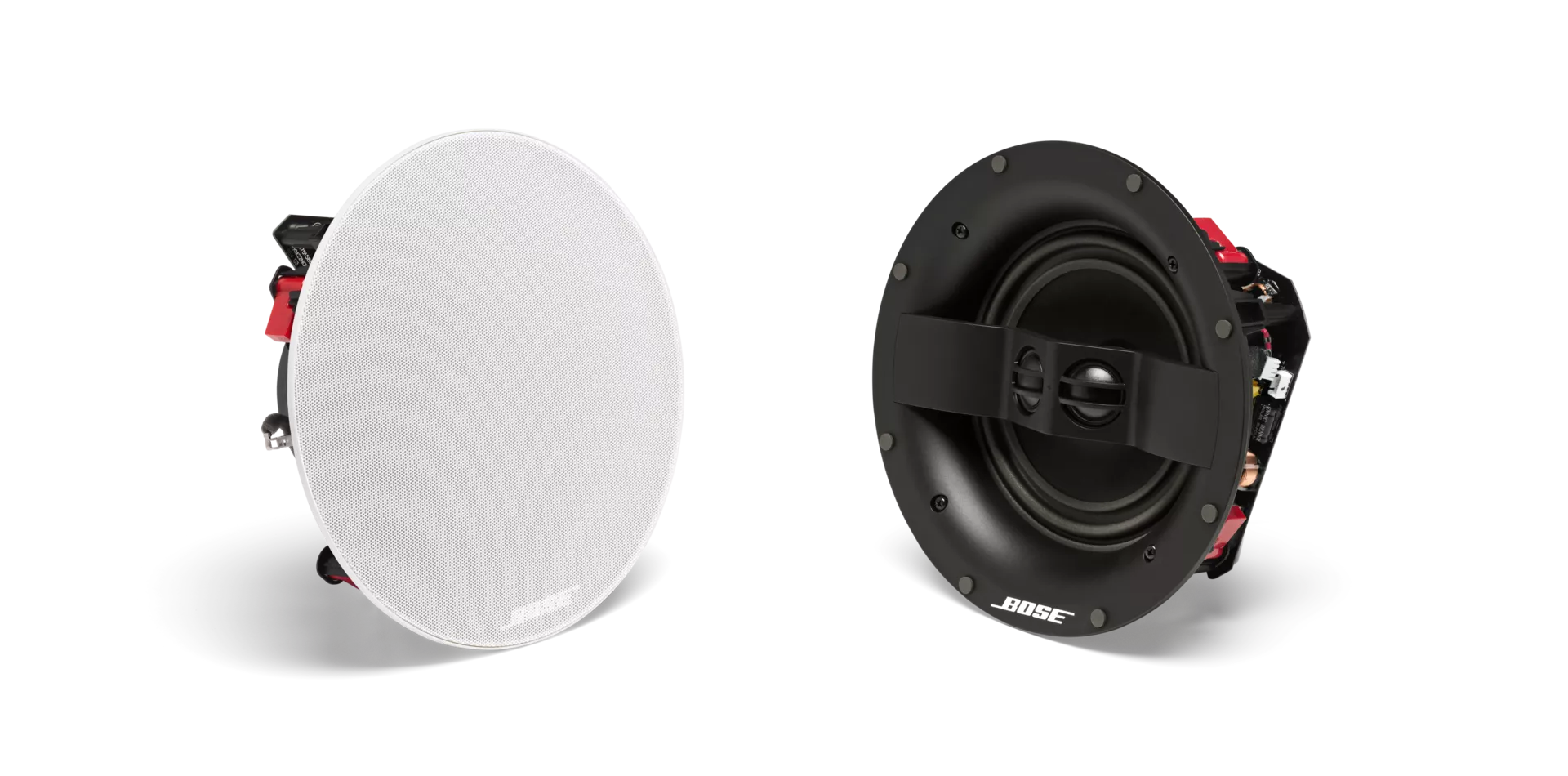
Virtually Invisible 791 In-Ceiling Speakers standing in a side angle in a white background.
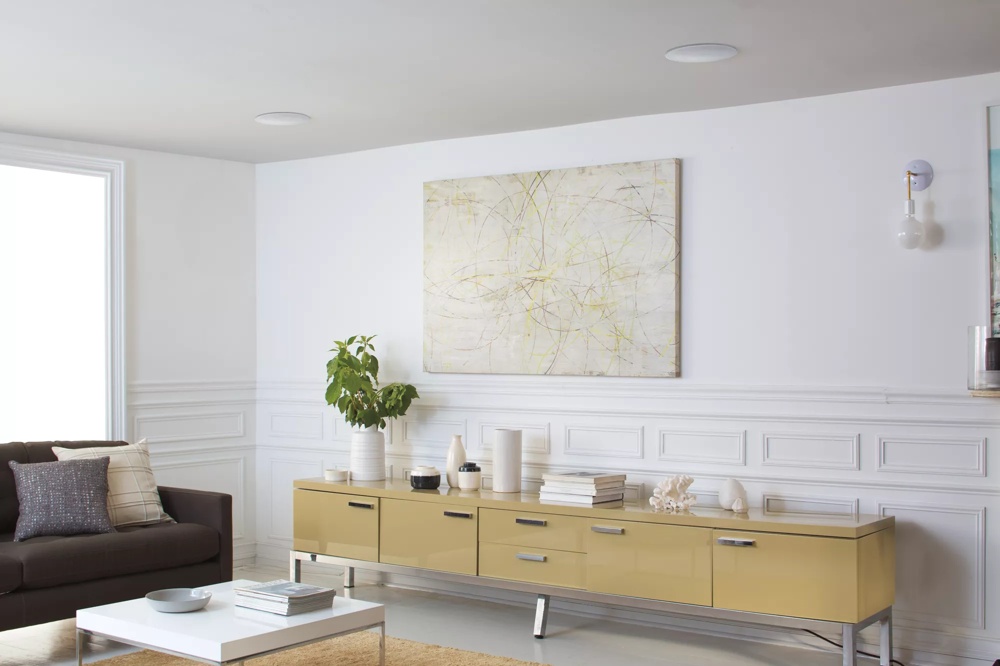
A room with Virtually Invisible 791 In-Ceiling Speakers installed on the ceiling

Designed to blend into your ceiling

These speakers are meant to disappear. Once installed, they sit flush and visually fade into the ceiling, leaving your room exactly as you planned it. No visible hardware. No compromises to the look of the space.
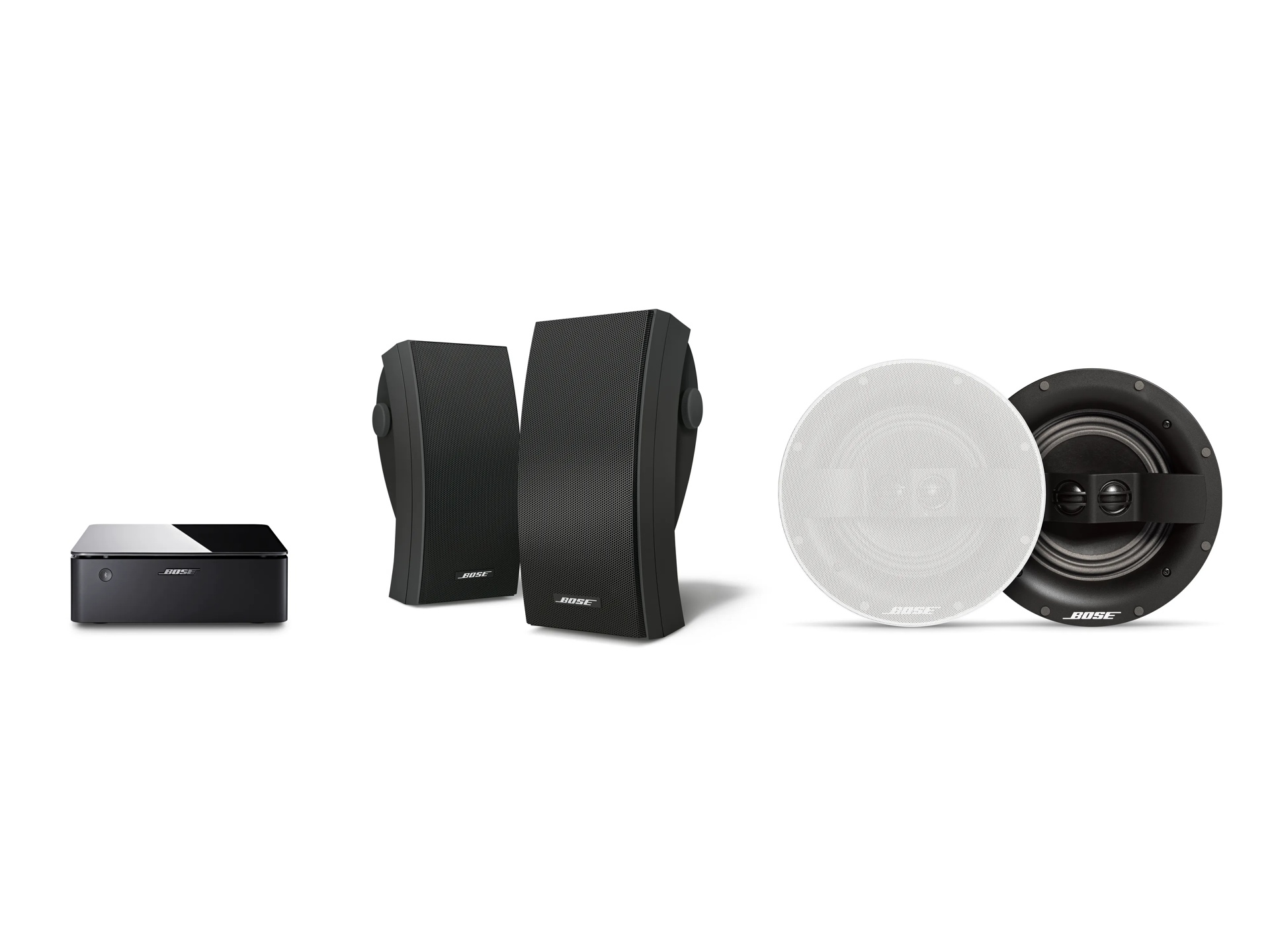
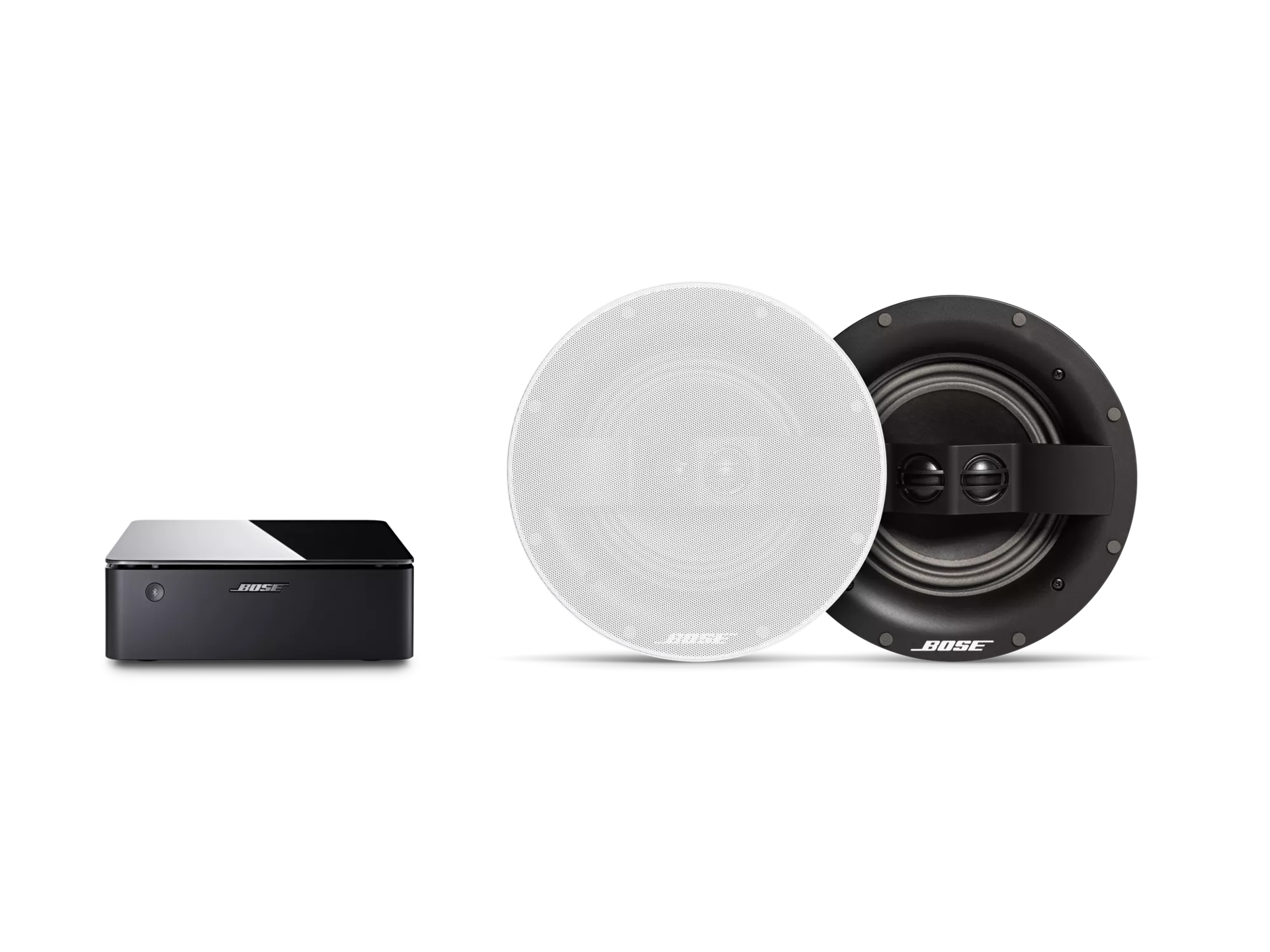
SoundTouch 251 Outdoor Speaker System, Bose Music Amplifier, and Virtually Invisible 791 In-Ceiling Speakers displayed on a white background.

Engineered for even room coverage

Bose engineers didn’t approach these as “speakers that happen to go in the ceiling.” Each unit pairs a 7-inch woofer with two strategically positioned 1-inch tweeters, arranged to distribute sound across the room instead of dropping it straight down. The effect is immediate. Music feels open, balanced, and stable as you move through the space.

Bose Stereo Everywhere speaker performance

Bose Stereo Everywhere speaker performance is designed to deliver balanced stereo sound over a wider area, minimizing the peaks and drop-offs common with overhead audio.

Compared to many in-ceiling speakers of similar size, the Virtually Invisible 791 Series II is designed to produce more spacious sound and play lower notes, helping avoid the hot spots that can make overhead audio feel uneven.

Ceiling speaker placement and room coverage

Placement matters with any ceiling speaker, but the Virtually Invisible 791 Series II is designed to be more forgiving than most. Because these speakers are engineered to spread sound evenly, placement is less about aiming and more about spacing.

They work best in rooms where sound should feel consistent as you move, like kitchens, living rooms, and open layouts. Rather than placing speakers directly over seating, spacing them to cover the room allows the design to do its job.

A few guidelines to keep in mind:

  • Small rooms typically work well with one evenly spaced pair.
  • Larger rooms or open layouts often benefit from two or more pairs for smoother coverage.
  • Symmetrical placement helps maintain balanced stereo sound.
  • Avoid walls and corners to prevent uneven reflections.

Ceiling speaker installation requirements

Virtually Invisible 791 Series II can be installed in most wood-frame ceilings finished with gypsum, plaster and lath, paneling, or similar materials. They’re also compatible with ceilings that contain malleable fiberglass batt insulation or blown-in cellulose insulation.

Ceilings with rigid foam insulation or asbestos are not recommended.

  • Choose speaker locations based on how you use the room.
  • Confirm joist direction.
  • Plan the speaker wire path in advance.

Do you need a receiver or amplifier for ceiling speakers?

Yes. Ceiling speakers require a compatible receiver or amplifier, along with the appropriate gauge and length of speaker wire.

When choosing a receiver or amplifier, look for one that supports the number of speaker pairs or zones you plan to use. If you expect to expand into multiroom audio later, choosing a setup that allows for growth can save time down the line.

Can you install ceiling speakers yourself?
Many people install ceiling speakers themselves. If you’re comfortable cutting drywall and using basic tools, it’s a manageable project.

Running speaker wire can take more time, especially in finished ceilings or multiroom setups. If access is limited or you want the installation completed quickly and cleanly, working with a professional may be the better option.

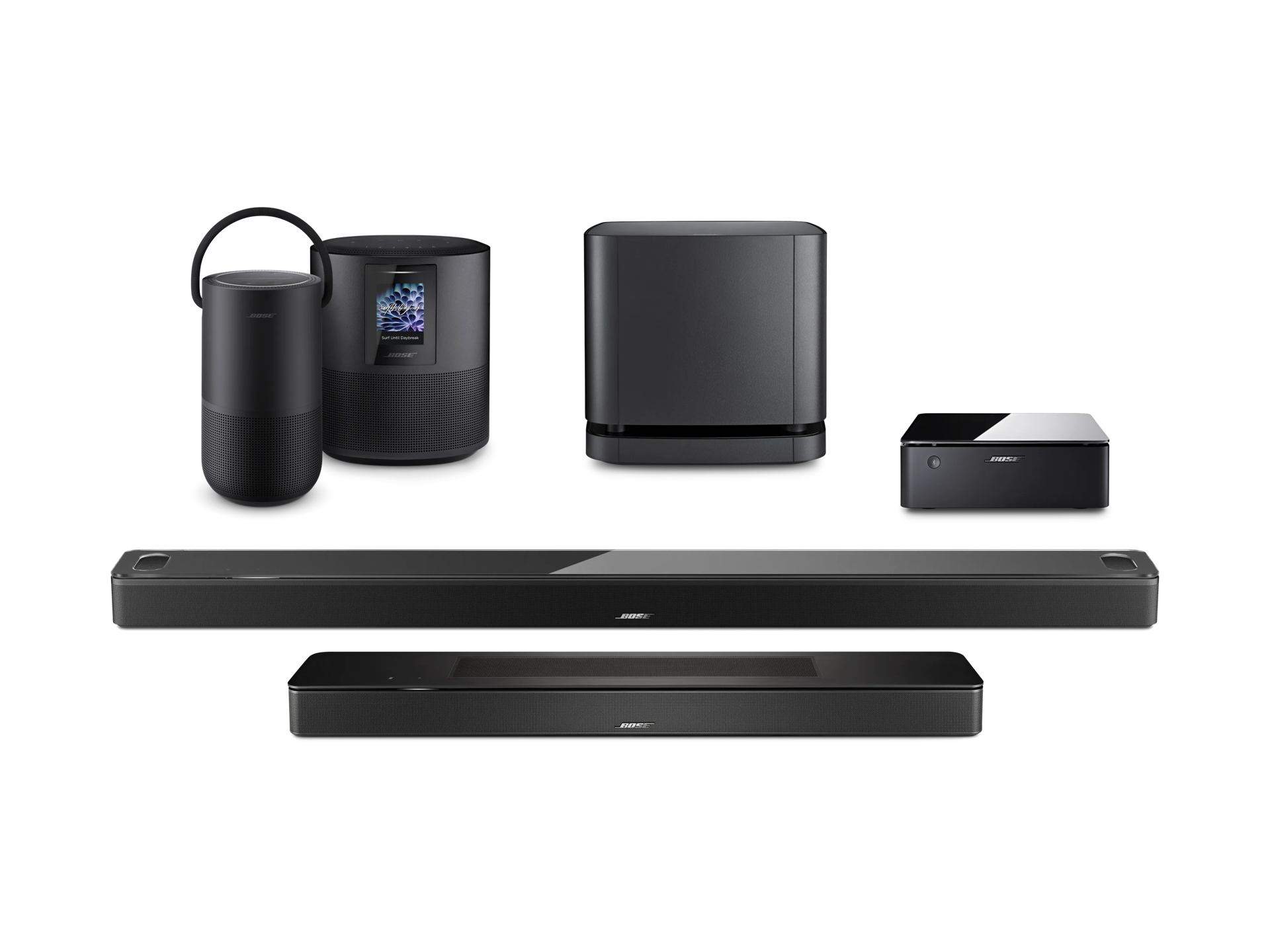
Black Bass Module 500, Bose Music Amplifier, Portable Smart Speaker, Smart Soundbar 900, Smart Speaker 500, and Smart Soundbar 300 displayed on a white background.

More Bose speakers for home theater and whole-home audio

Ceiling speakers often work best as part of a broader system, especially in homes where music and TV share the same space.
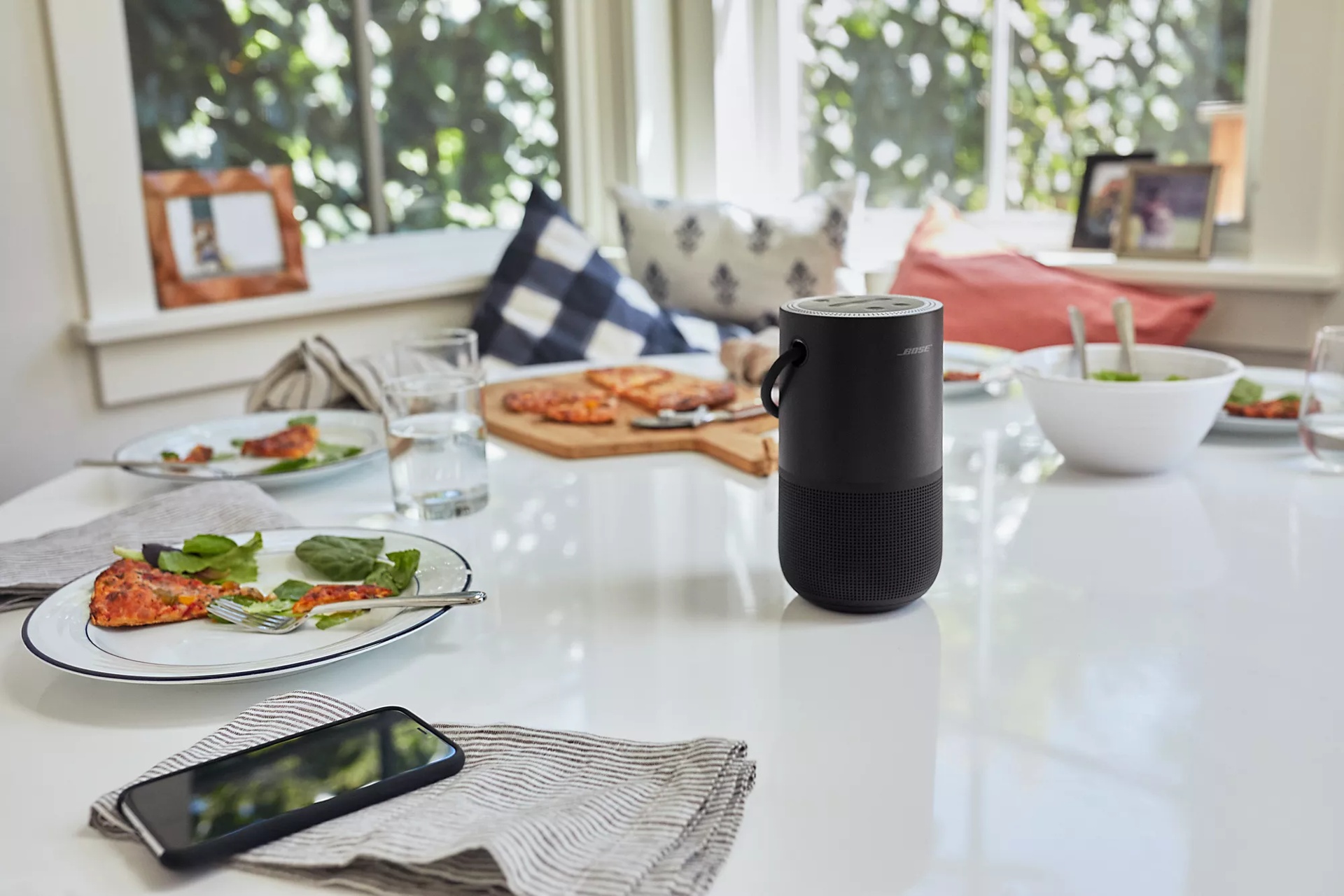
Black Portable Smart Speaker in a white table

Bose Portable Smart Speaker

The Bose Portable Smart Speaker is designed to integrate naturally into your home audio setup. Over Wi-Fi®, it supports voice control, built-in streaming, and multiroom playback through the Bose app, so it works seamlessly with other Bose speakers and soundbars. Its 360-degree sound fills the room evenly, making placement simple while delivering fuller, more balanced audio than most compact speakers. For spaces where ceiling speakers aren’t practical, it offers a refined way to extend Bose sound throughout the home without adding complexity.

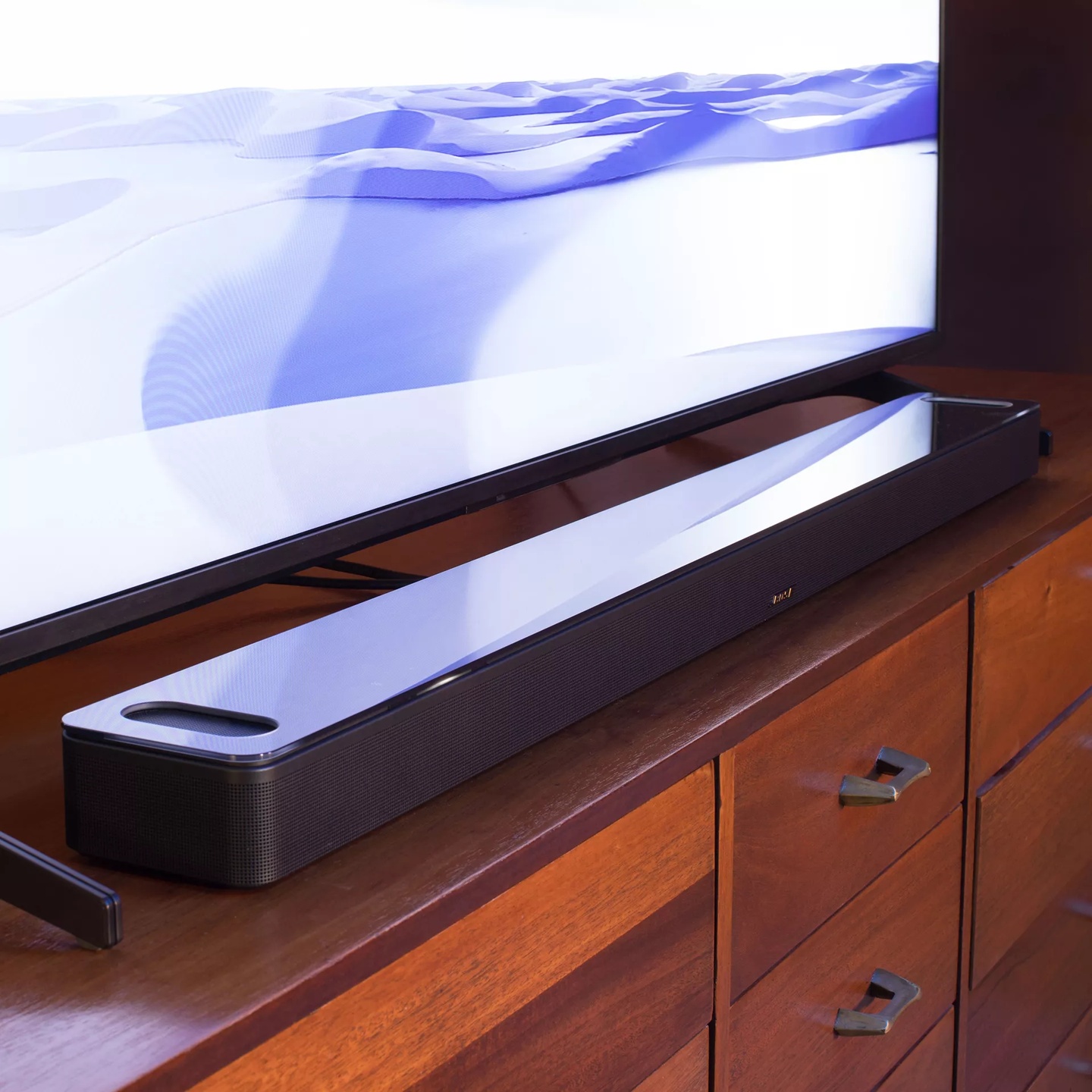
Bose Smart Soundbar

The Bose Smart Soundbar is designed to anchor TV and movie sound from a compact design. It uses Dolby Atmos® when available and Bose TrueSpace to create a wider, more dimensional soundstage, while A.I. Dialogue Mode keeps voices easy to follow without constant volume changes. For homes that use ceiling speakers for music, it adds focused front-of-room sound for TV and movies.
Compare Bose soundbars

Black Smart Ultra Soundbar standing in a wood tv cabinet

Bose Surround Speakers

Bose Surround Speakers are designed to expand a soundbar system into a more complete surround experience without adding visual bulk. Used with a Bose Smart Soundbar and placed behind the main listening position, they add directional detail and spatial depth that enhances movies, sports, and TV shows. Wireless connectivity simplifies placement and setup, while their compact size keeps attention on the screen rather than the hardware. For home theater setups that already balance clean design with performance, these speakers provide a clear step up in immersion.
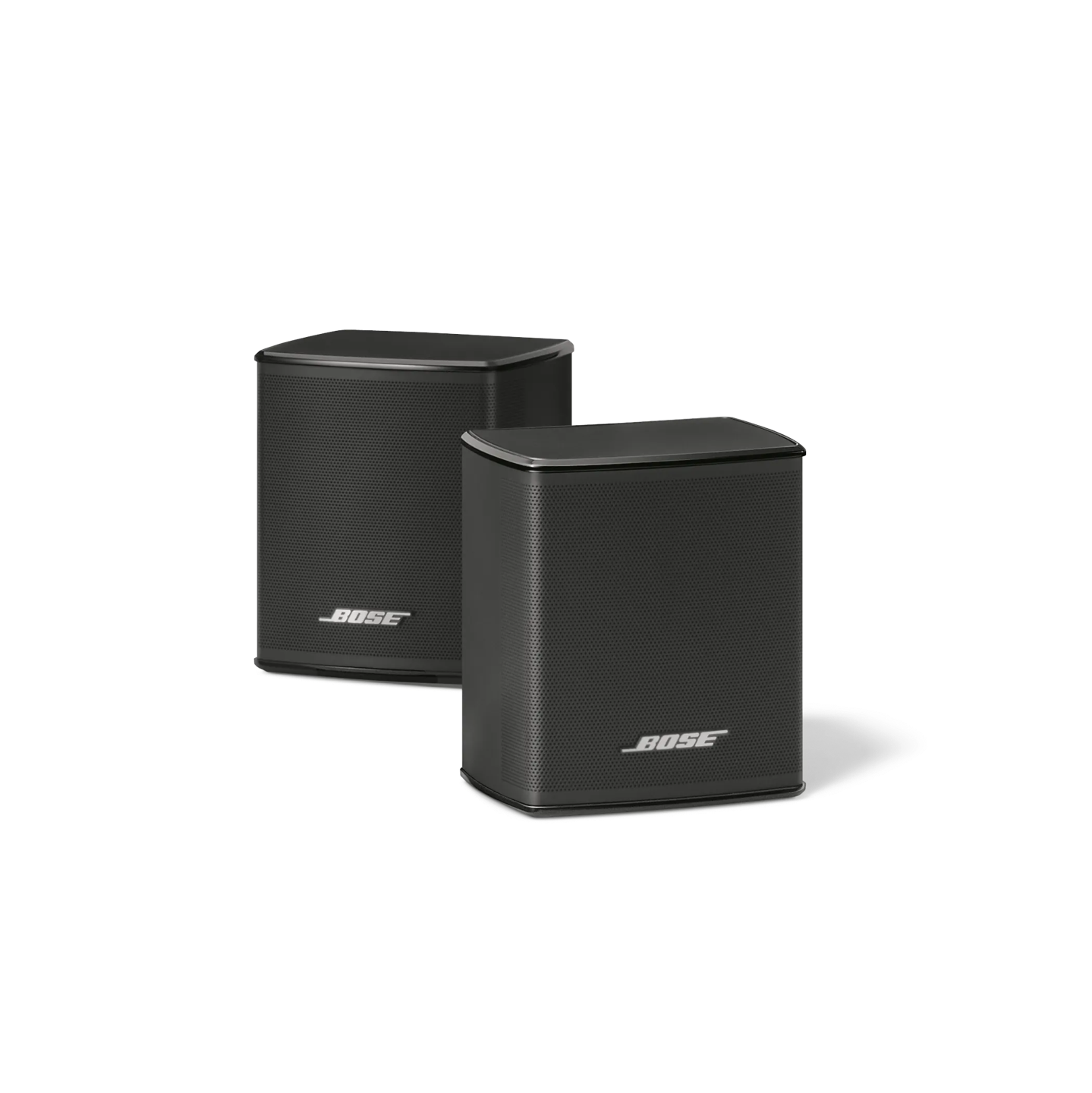
Black Surround Speakers in a white background

Bose ceiling speakers, done right

The Virtually Invisible 791 Series II in-ceiling speakers are engineered to deliver balanced sound across a wider area. Designed to work as part of a complete home audio system, they reflect Bose’s long-standing focus on consistency, coverage, and integration. To see how Bose speakers can fit into your space and listening setup, explore the full lineup below.

Related Products