NEW COLOR DROP: Sink into limited-edition Sky Pink Collection. Shop

A sound that surrounds you
Spatial audio creates a sense of dimensionality by mimicking how we naturally perceive sound in real environments. It starts with acoustic modeling, the process of simulating the physical effects your head, ears, and upper body have on incoming sound waves. These effects, known as head-related transfer functions (HRTFs), alter the timing and frequency of sound depending on where it’s coming from. Your brain decodes these cues instantly, allowing you to localize sound: up close or far away, overhead or behind.
A saxophone could feel off to the side. A bird call might rise above. Each sound maintains a specific direction and distance, which helps create a more natural, believable soundstage.
Most systems use binaural rendering to simulate this spatial realism through just two earcups. When done well, spatial audio maintains stable, directional placement across the sound field, so elements stay locked in place, exactly where your brain expects them to be.

How Bose delivers realistic 3D sound
Bose Immersive Audio takes a different approach to spatial sound. It’s engineered to feel immediate and intuitive, designed to mirror how we naturally hear in real space. Using proprietary digital signal processing and dynamic head tracking in Bose headphones, sound is placed just in front of you and remains anchored, even as you move. This stability avoids the exaggerated movement found in some formats, keeping the experience focused, natural, and easy to follow.
Bose spatial headphones combine noise cancellation with Immersive Audio , cutting out distractions so spatial detail sounds clearer and more lifelike. With Still and Motion modes, they keep the soundstage stable, reducing fatigue and helping everything stay naturally in place.
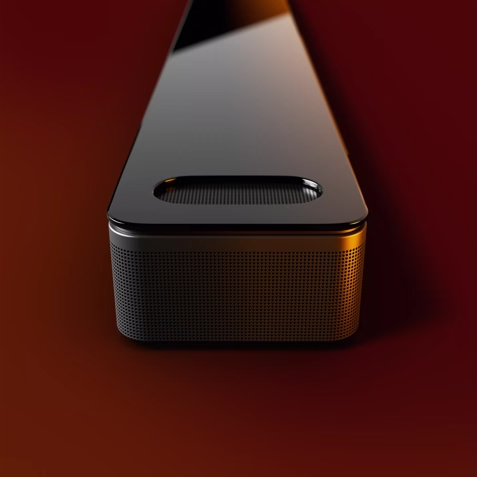
At home, the Bose Smart Ultra Soundbar delivers spatial audio through nine precisely arranged speakers, including two upward-firing drivers. It automatically finetunes output to your room, helping dialogue stay clear and effects remain immersive.
Bose Immersive Audio is built around how spatial sound should feel: stable, emotionally connected, and effortlessly real. That difference is intentional.
Spatial audio vs. Dolby Atmos explained
Spatial audio is a broad term that includes various technologies designed to simulate immersive three-dimensional sound. Dolby Atmos® is one of the most well-known formats within that category, created by Dolby Laboratories and used by content creators and manufacturers under license.
Dolby Atmos is mixed from the ground up, assigning up to 118 sound objects across a 7.1.2 channel layout for precise spatial placement, including overhead. It's supported on platforms like Netflix and Disney+, but playback depends on both compatible content and hardware.
Spatial audio, by contrast, can also be applied after production. With Bose TrueSpace technology, found in the Smart Ultra Soundbar, stereo or 5.1 content is analyzed and upmixed into spatial channels, adding height and depth even without an Atmos mix. Upward-firing drivers reflect audio off the ceiling to create a more immersive experience, like hearing rain sweep across the room or voices lift above the action. No additional speakers required.
In Bose QuietComfort Headphones and Quiet Comfort Ultra Earbuds (2nd Gen), spatial audio is rendered through Immersive Audio with dynamic head tracking, delivering dimensionality from standard stereo content without relying on Atmos-encoded mixes.
Both formats deliver immersive sound. The difference lies in flexibility. Dolby Atmos relies on source material. Bose spatial audio adapts to more of what you already love, bringing dimensional sound to everyday content with greater consistency.


Beyond stereo and surround sound

Bring spatial audio into your everyday
You don’t need a full theater setup or a library of Atmos content to enjoy spatial audio. With Bose, it’s built in. Our spatial headphones create layered, lifelike sound from the music and shows you already enjoy. At home, the Smart Ultra Soundbar adds depth and height to standard audio, even when the content isn’t mixed in Atmos.
From couch to commute, Bose makes it easy to hear more in everything you play.
